
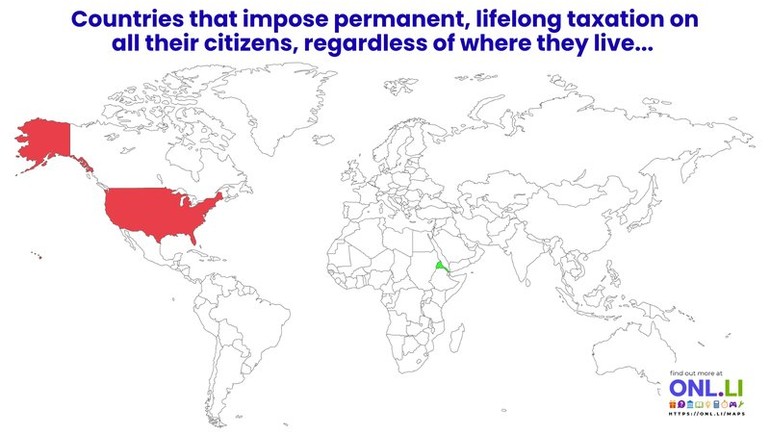
Most countries tax people based on where they live, but a small number take a different approach. This map highlights countries that impose taxation on citizens even after they move abroad. The United States is well known for its citizenship-based taxation system, while Eritrea levies a diaspora tax on many of its citizens living overseas, making these two countries notable exceptions to the residency-based systems used almost everywhere else.
For most nations, becoming a tax resident in another country generally ends or greatly reduces domestic tax obligations, although reporting rules and tax treaties may still apply. The United States, however, generally requires its citizens to continue filing U.S. tax returns regardless of where they reside. While many expatriates owe little or no U.S. income tax because of foreign tax credits and the Foreign Earned Income Exclusion, the filing requirement itself remains in place.
Eritrea's system differs from that of the United States. Rather than operating a comprehensive worldwide income tax system, Eritrea has historically imposed a 2% diaspora tax on many citizens living abroad. The practice has drawn international attention, and several countries have restricted or prohibited its collection within their borders due to legal and diplomatic concerns.
One interesting detail is that the United States is virtually unique among major economies in maintaining a citizenship-based taxation system. Nearly every other developed country, including Canada, the United Kingdom, Australia, Japan, and members of the European Union, primarily taxes individuals based on tax residency rather than citizenship.
Maps like this highlight how tax systems can vary dramatically around the world. Although global mobility has become increasingly common, the rules governing taxation remain closely tied to each country's legal traditions and fiscal policies.