

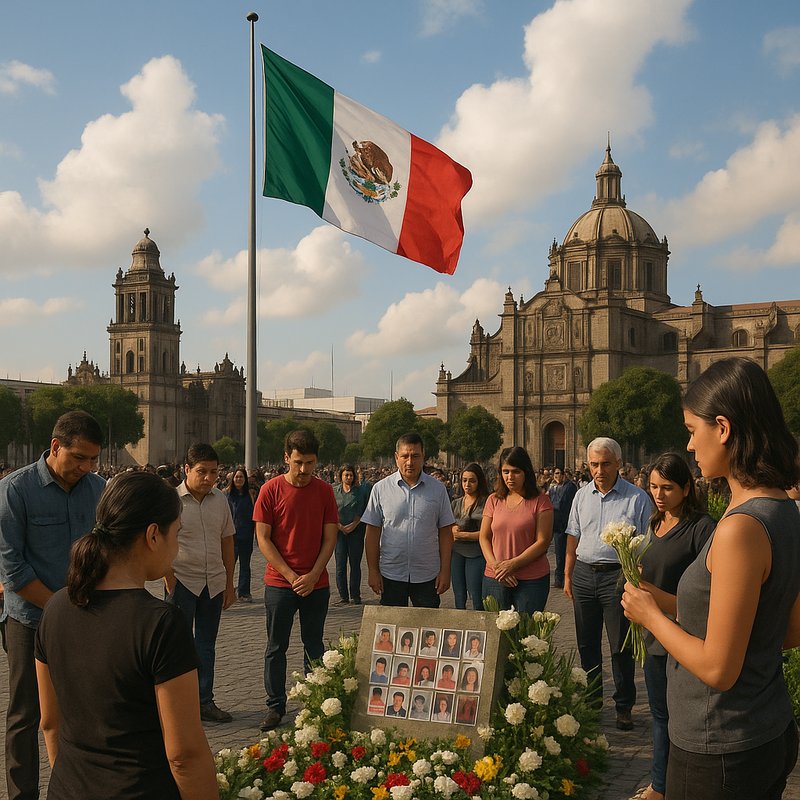
On September 19, 2019, Mexico paused to honor victims of both the devastating 1985 magnitude 8.0 earthquake and the 2017 magnitude 7.1 quake — two disasters sharing the same haunting date. You'll see flags flying at half-staff, minutes of silence observed at the exact moment of impact, and communities gathering at memorials with flowers and photographs. It's a day that cuts deep into Mexico's national identity, and there's much more to this story than you might expect.
Key Takeaways
- Mexico marked September 19, 2019, commemorating both the 1985 magnitude 8.0 and 2017 magnitude 7.1 earthquakes, which together killed over 9,800 people.
- Flags flew at half-staff citywide, with a minute of silence held at the exact moment of each disaster's impact.
- An official ceremony anchored in the Zócalo included solemn flag-raising rituals connecting generations of survivors and victims' families.
- Families gathered at the Álvaro Obregón memorial park, where a seven-story collapse killed 49 people during the 2017 quake.
- Nationwide earthquake drills reinforced preparedness lessons, reflecting civil emergency culture born from the catastrophic 1985 disaster.
Two Earthquakes, One Date: Why September 19 Defines Mexico
September 19 isn't just a date on Mexico's calendar — it's a wound that's been reopened twice. In 1985, a magnitude 8.0 earthquake struck at 7:19 a.m., killing somewhere between 9,500 and 12,000 people. Thirty-two years later, on that exact same date, a 7.1 magnitude quake hit again, claiming 369 more lives and collapsing 38 buildings in the capital alone.
You can't ignore what that historical coincidence does to a nation's psyche. It transforms a single date into something far heavier — a cornerstone of collective identity, a shared scar that connects generations. Every September 19, you're not just remembering one disaster. You're carrying two, and that weight has permanently shaped how Mexico understands loss, resilience, and memory. This kind of cultural heritage erasure, whether through natural disaster or deliberate destruction like the Taliban's demolition of Afghanistan's ancient Buddha statues in 2001, reminds the world how quickly irreplaceable pieces of human history can be lost forever.
The 1985 Earthquake That Shaped a Nation's Memory
At 7:19 a.m. on September 19, 1985, a magnitude 8.0 earthquake tore through Mexico City, killing somewhere between 9,500 and 12,000 people — estimates still vary widely, and that uncertainty alone tells you something about the scale of the chaos. Buildings collapsed, neighborhoods vanished, and the government's slow response forced ordinary citizens to organize their own rescue efforts.
That moment of collective action rewired Mexico City's urban memory permanently. You can trace today's civil emergency culture directly back to what people taught themselves in those days of rubble. The collective trauma didn't fade — it hardened into something useful: stricter building codes, disaster protocols, and an annual commemoration that refuses to let the city forget what happens when preparedness fails.
How the 2017 Quake Reopened Old Wounds on the Same Date
Thirty-two years later, on the exact same date, a magnitude 7.1 earthquake struck Mexico City again — and if the 1985 quake had hardened into collective memory, the 2017 quake cracked it wide open.
You can't overstate the psychological trauma of watching history repeat itself on the same calendar date. The 2017 quake killed 369 people, collapsing 38 buildings and leaving intergenerational memory brutally refreshed.
Here's what made 2017 uniquely devastating:
- 228 people died in the capital alone
- 49 victims perished in a single seven-story office building on Álvaro Obregón
- Families who'd survived 1985 relived it in real time
- The government seized the collapse site to build a memorial park
September 19 wasn't just a date anymore — it'd become an open wound. Much like the targeting of civilian institutions seen in extremist attacks abroad, the destruction of familiar community spaces leaves populations grappling with compounded grief and lasting psychological harm.
How September 19 Commemorations Have Evolved Over the Decades
What began as a city in shock has slowly become a city in ritual. After 1985, Mexico City turned raw grief into structure. You now see it every September 19: flags at half-staff, a minute of silence timed to the exact moment of impact, and school drills that teach children what survivors learned the hard way.
The 2017 earthquake deepened that practice. Families who lost someone in the Álvaro Obregón collapse joined a commemoration that already carried 32 years of weight. Their presence reshaped the day again, adding newer grief to older memory.
What you witness today isn't just mourning. It's community resilience made visible — a city that has chosen, year after year, to remember precisely so it can respond better next time.
The Collapse Site on Álvaro Obregón That Became a Memorial Park
The seven-story office building on Álvaro Obregón didn't just collapse — it became the face of the 2017 disaster. Forty-nine people died there, making it the deadliest single site of the earthquake. You can now visit what the city government transformed into a space of remembrance after taking possession of the property.
Here's what defines the site today:
- The memorial design honors victims through permanent markers and open space
- Community gardens give neighbors an active role in maintaining the grounds
- Families still gather there on September 19 each year
- The space blends grief with civic life, not just stone and silence
It's a place where loss didn't get buried — it got preserved.
The Rituals That Unite Mexico on Earthquake Anniversaries
Every September 19, something shifts across Mexico — the Álvaro Obregón memorial is just one node in a nationwide web of remembrance.
You'll notice flags flying at half-staff, streets quieting at the exact moment the earthquakes struck, and officials and residents standing together for a minute of silence.
In the Zócalo, the solemn flag-raising anchors the official ceremony, while across neighborhoods, community altars carry flowers, photographs, and names.
Public vigils draw families who've carried grief for decades — some since 1985, others since 2017.
These aren't separate traditions; they're threads in the same national ritual. The date doesn't just mark loss — it asks you to remember why buildings fell, who wasn't protected, and what still needs to change.
How Mexico Channeled Its Grief Into Smarter Earthquake Safety
Grief, in Mexico, became policy. After the earthquakes of 1985 and 2017, the country didn't just mourn — it rebuilt smarter. You can see that transformation in every layer of modern Mexican disaster preparedness.
The losses forced real change:
- Building codes were tightened after 1985 and reviewed again after 2017's collapses
- Early warning systems now give residents vital seconds to evacuate before shaking begins
- Memorial sites like Álvaro Obregón became permanent reminders of structural failure
- Annual drills on September 19 keep preparedness alive in public memory
You're witnessing a city that converted tragedy into infrastructure. Mexico's response wasn't perfect, but it was purposeful. Each anniversary reinforces that the dead didn't just leave grief behind — they left lessons worth keeping.