

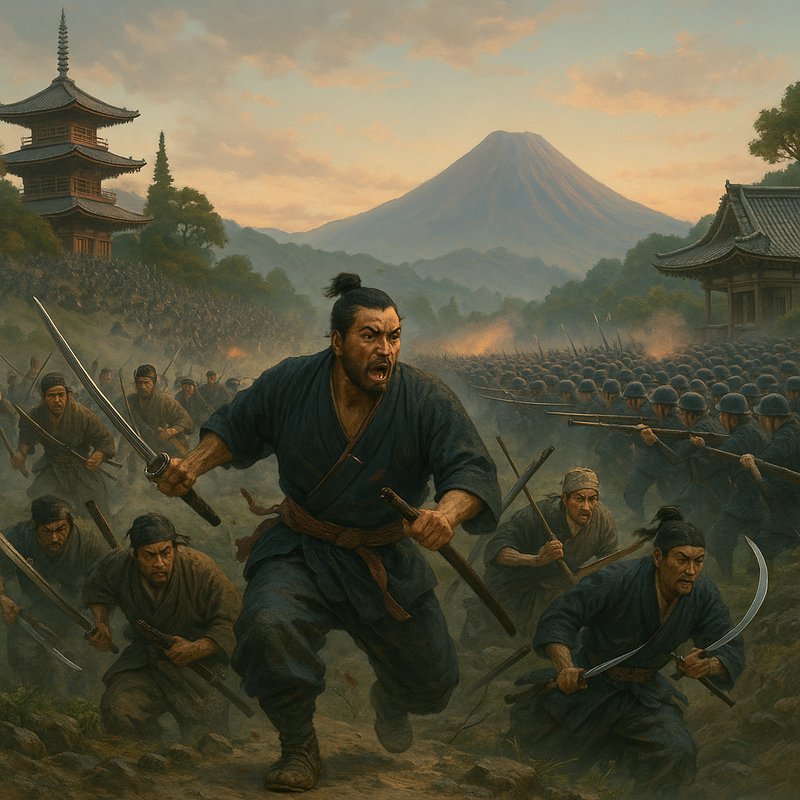
On September 24, 1877, the Satsuma Rebellion came to a brutal end at the Battle of Shiroyama. You're looking at 300 exhausted samurai rebels facing down 30,000 imperial troops in a lopsided final stand. Saigō Takamori led a desperate last charge, sustained a critical wound, and died that morning — effectively ending Japan's samurai era forever. There's far more to this pivotal moment than the final numbers suggest.
Key Takeaways
- The Battle of Shiroyama on September 24, 1877, marked the final stand of Saigō Takamori's rebel samurai forces.
- Saigō's roughly 300 remaining rebels were overwhelmed by approximately 30,000 imperial troops in a pre-dawn assault.
- Saigō sustained a critical hip wound during his final charge against imperial lines.
- A loyal follower beheaded Saigō to preserve his honor, with his head later recovered by imperial troops.
- The defeat ended organized samurai resistance and solidified the Meiji government's authority and modernization reforms.
What the Satsuma Rebellion Was and Why It Ended at Shiroyama
The Satsuma Rebellion was Japan's last samurai uprising, beginning on January 29, 1877, when disenfranchised warriors rose against the Meiji government's sweeping modernization reforms that had stripped them of their privileges and status.
To understand its historical context, you must recognize how deeply the abolishment of samurai rights fueled their rage.
Saigō Takamori led these warriors through nine months of fierce fighting, including the Kumamoto Castle siege and the battle of Tabaruzaka.
By September 1877, imperial forces had cornered his dwindling army at Shiroyama near Kagoshima. The samurai legacy demanded a final stand rather than surrender.
With roughly 300 rebels facing 30,000 imperial troops, Shiroyama became the rebellion's inevitable end point.
What Triggered the Last Samurai Uprising?
When the Meiji government stripped samurai of their hereditary privileges, it ignited a fury that had been building since Japan's feudal era began crumbling.
You can trace samurai disenfranchisement directly to policies that eliminated stipends, banned sword-carrying, and replaced warrior-class armies with conscripted peasant soldiers.
Saigō Takamori, once a celebrated Meiji insider, broke with the government over its aggressive modernization resistance policies and the dismissal of traditional values.
He believed Japan was abandoning its soul in pursuit of Western influence.
Former samurai across Satsuma domain rallied behind Saigō, channeling their economic desperation and wounded pride into open revolt.
What started as political grievance became armed rebellion on January 29, 1877, launching Japan's final and most consequential samurai uprising.
How the Battle of Shiroyama Unfolded on September 24, 1877
By September 24, 1877, Saigō Takamori's once-formidable rebel army had been reduced to roughly 300 exhausted samurai, cornered on a hill near Kagoshima and facing 30,000 imperial troops armed with modern firearms.
The imperial forces launched their assault before dawn, overwhelming the rebels with coordinated battle tactics that exploited their numerical and technological advantages.
You'd recognize that Saigō's samurai strategies, rooted in traditional close-quarters combat, couldn't counter relentless rifle volleys and artillery fire.
As imperial lines tightened, Saigō led a final suicidal charge directly into enemy positions. The rebels were cut down swiftly.
Saigō sustained a hip wound during the assault, and accounts suggest followers beheaded him to preserve his honor.
How Did Saigo Takamori Die at Shiroyama?
Saigō Takamori's exact manner of death remains one of history's more debated questions, even though witnesses were present.
You'll find accounts vary considerably, but the sequence likely unfolded this way:
- Saigō sustained a serious bullet wound to the hip during the final charge against imperial lines.
- The wound either incapacitated him or triggered his decision to end his life.
- To preserve Saigō's honor, a loyal follower reportedly beheaded him on the battlefield.
- His head was later recovered by imperial troops, confirming his death.
Whether Saigō formally committed ritual suicide or simply succumbed to shock from his bullet wound, the outcome remained the same.
His death that morning definitively ended both the rebellion and the samurai era's last stand.
The Satsuma Rebellion's Final Death Toll at Shiroyama
The numbers at Shiroyama tell a stark story: all 40 to 50 remaining samurai who charged imperial lines died in the final engagement. The casualty statistics paint a brutal picture of overwhelming imbalance — 300 rebels against 30,000 imperial troops equipped with modern firearms.
You can trace the samurai losses beyond that final morning. Prior skirmishes throughout the nine-month rebellion had already claimed hundreds of fighters, steadily grinding down what began as a formidable force.
By September 24, Saigō's men were exhausted, outgunned, and vastly outnumbered.
No survivors emerged from Saigō's immediate group. The complete annihilation of his forces wasn't just a military defeat — it permanently closed the chapter on armed samurai resistance against Japan's modernizing imperial government.
Why the Satsuma Rebellion Changed Japan Forever?
What happens when a government crushes its last armed opposition? You get a nation fundamentally reshaped. The Satsuma Rebellion's defeat triggered rapid social transformation and imperial consolidation across Japan.
Here's what changed permanently:
- Samurai privileges vanished, forcing former warriors into civilian life without their traditional status or stipends.
- Conscript armies replaced warrior classes, proving commoners could defeat elite samurai fighters using modern weapons.
- Feudal structures collapsed, clearing the path for Japan's full evolution into a centralized modern state.
- Meiji authority became unquestionable, silencing any remaining resistance to Western-influenced governance and military reform.
You can't overstate the impact. Japan didn't just win a battle — it buried an entire social order and stepped decisively into the modern world.