

If you're exploring September 24's significance to Japan's Meiji era, you're uncovering a pivotal moment. On September 24, 1877, Japan's government defeated the Satsuma Rebellion, permanently ending the samurai era and validating its modernized conscript army. This victory cemented the Meiji government's sweeping reforms, from abolishing feudal privileges to building railroads. Japan later marked the Meiji era's 150th anniversary in 2018 with ceremonies reflecting both pride and tension — and there's much more to uncover here.
Key Takeaways
- September 24, 1877, marked the defeat of the Satsuma Rebellion, ending the last major samurai uprising against Japan's Meiji government.
- The rebellion's defeat validated Japan's modernized conscription army, confirming that the old feudal order could not survive modernization.
- Ex-samurai rebelled against Meiji reforms that stripped them of stipends, titles, weapon rights, and social standing.
- Japan's 150th Meiji anniversary ceremony in 2018 drew only 300 attendees, reflecting public sensitivity toward the era's complexities.
- Commemorative activities in 2019 linked Meiji history to national identity, honoring Emperor Meiji through shrines, rituals, and Yabusame demonstrations.
September 24, 1877: The Day the Samurai Era Ended
On September 24, 1877, government troops crushed the Satsuma Rebellion, ending the last major samurai uprising against the Meiji government and effectively closing the samurai era for good. The defeat validated Japan's modernized army and confirmed that the old feudal order couldn't survive the Meiji transformation.
When you explore this moment in historical narratives, you see how rapidly Japan shifted from warrior-class governance to centralized, industrialized statehood. The rebellion had started in January 1877, led by ex-samurai resisting modernization and the abolition of feudalism. Its failure sealed the samurai legacy as a cultural memory rather than a political force.
That single date—September 24—now carries the weight of an irreversible turning point in Japan's modern identity.
The Reforms the Satsuma Rebels Were Fighting Against
The ex-samurai who took up arms in 1877 weren't fighting shadows—they were fighting a government systematically dismantling everything that had defined their place in Japanese society.
You can trace their grievances directly to feudal abolition policies that stripped samurai of their stipends, titles, and exclusive right to bear arms. Modernization resistance wasn't simply nostalgia—it was a reaction to compulsory military service replacing the warrior class, railroads and telegraph lines reshaping the economy, and Western-influenced institutions overriding centuries of feudal structure.
The Meiji government built munitions factories, reorganized land ownership, and centralized political power. For the samurai, each reform wasn't progress—it was erasure.
The Satsuma Rebellion became their final stand against a transformation they couldn't stop and wouldn't accept.
September 24 and the Rebellion That Tested Meiji's Army
September 24, 1877 marked the day government troops crushed the Satsuma Rebellion, ending the last major samurai uprising against the Meiji state. When you look at what that victory meant, it's clear the rebellion significance went far beyond a single military campaign.
The Meiji army, built on conscription and modern tactics rather than samurai privilege, proved it could defeat a seasoned warrior class that had dominated Japan for centuries.
Ex-samurai launched the rebellion in January 1877, furious over the reforms dismantling their status and livelihoods. Their defeat confirmed that the new order wasn't reversing course.
You can trace Japan's military modernization directly through this conflict—it validated every structural change the Meiji government had pushed through, silencing armed resistance and consolidating the era's transformation permanently.
Japan's 150th Anniversary Ceremonies: Scale, Tension, and Abe's Message
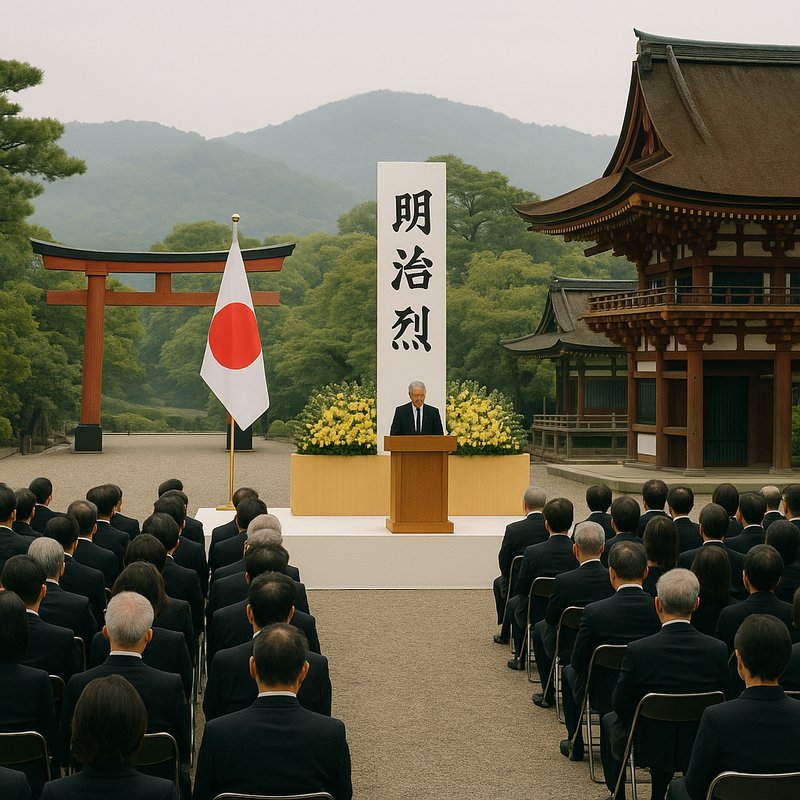
When Japan marked the 150th anniversary of the Meiji era's beginning on October 23, 2018, the ceremony's scale told its own story.
Held at Tokyo's Parliamentary Museum in Chiyoda Ward, it drew only about 300 attendees — a stark contrast to the roughly 10,000 who came to the 100th anniversary. That gap wasn't accidental. Persisting criticism over the Meiji era's political implications, particularly its links to later expansionism, kept officials from staging a full-scale celebration.
Prime Minister Shinzo Abe still participated and urged Japan to carry the era's achievements forward. His message underscored the commemorative significance of the moment while carefully maneuvering public sensitivity.
You can see how Japan balanced national pride with historical accountability in every deliberate choice made that day.
Shrines, Holidays, and Living Memorials to Emperor Meiji
Beyond state ceremonies and political speeches, Japan's memory of Emperor Meiji lives through shrines, annual rituals, and reframed holidays. If you visit Meiji Shrine, you'll witness a Yabusame demonstration held annually in his honor, reflecting the shrine's significance in keeping imperial memory active and tangible.
You can also trace his legacy through Culture Day, observed every November 3. It originated as Meijisetsu, a holiday marking Emperor Meiji's birthday. After Japan's 1946 constitution, authorities reframed it around peace and culture, though its roots remain clear.
These cultural observances show how Japan balances historical reverence with modern values.
In 2019, official commemorative activity deliberately connected Meiji history to national identity while avoiding uncritical celebration, acknowledging both the era's achievements and its complicated legacy.