
For most Americans, pumping your own gas is a normal part of driving. You pull up to the pump, swipe a card, choose the fuel grade, and fill the tank yourself. But in one state, that routine is still against the rules.
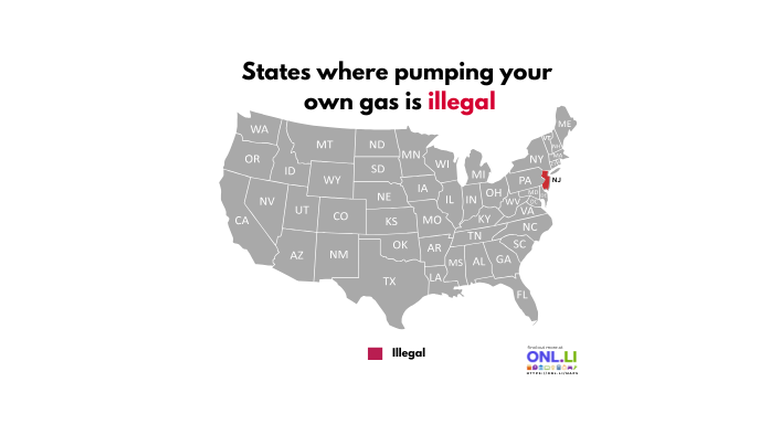
As the map shows, New Jersey is the only U.S. state where drivers are not allowed to pump their own gas. Oregon used to be part of this small group, but the state changed its law in 2023 to allow self-service fueling while still requiring full-service options at many stations.
Why New Jersey Stands Alone
New Jersey’s ban on self-service gasoline dates back to the Retail Gasoline Dispensing Safety Act, commonly traced to 1949. The law was built around concerns about fire safety, proper fuel handling, and customer protection. Under the rule, gas station attendants must pump gasoline for customers instead of allowing drivers to do it themselves.
For visitors, this can feel unusual. A driver from almost any other state may instinctively get out of the car and reach for the pump, only to be told to wait for an attendant.
How the Rule Works
In New Jersey, the process is simple for customers. Drivers pull up, tell the attendant what type of fuel they want and how much, and the attendant handles the rest. The customer usually remains in the vehicle unless they need to pay inside, clean a windshield, or buy something from the station store.
The rule applies to gasoline. It is part of why New Jersey gas stations have a different rhythm than stations in most of the country: attendants move from car to car, pumps may run while drivers stay seated, and full-service fueling is treated as the standard rather than a premium option.
Oregon Used to Be on the List
For decades, Oregon was also known for restricting self-service gas. That changed in 2023, when Oregon updated its rules to allow self-serve fueling statewide. The state still requires stations to provide attended service, so drivers can usually choose whether to pump their own gas or have an attendant do it.
That change left New Jersey as the last state with a statewide ban on drivers pumping their own gasoline.
Why Supporters Want to Keep Full Service
Supporters of New Jersey’s rule often point to convenience. Drivers do not have to leave the car in rain, snow, heat, or cold. Full service can also be helpful for older drivers, people with disabilities, parents with small children in the car, and anyone who simply prefers not to handle the pump.
There is also a jobs argument. Full-service stations require attendants, and some supporters see the law as preserving service jobs that would otherwise disappear.
Why Critics Want the Law Changed
Critics argue that New Jersey’s rule is outdated. Since drivers in nearly every other state pump their own gas safely, they say the safety argument is no longer as strong as it once was. They also argue that self-service could reduce labor costs, speed up fueling during busy periods, and give customers more choice.
There have been repeated efforts to change the law, including proposals that would allow both self-service and full-service lanes. As of now, though, New Jersey has kept the ban in place.
A Small Law With a Big Identity
New Jersey’s gas-pumping rule has become more than a fuel station policy. It is part of the state’s identity. Some residents defend it proudly, while others see it as an odd leftover from another era.
That is what makes the map interesting. One small highlighted state represents a major difference in everyday driving culture. In 49 states, pumping your own gas is routine. In New Jersey, it is still the attendant’s job.