

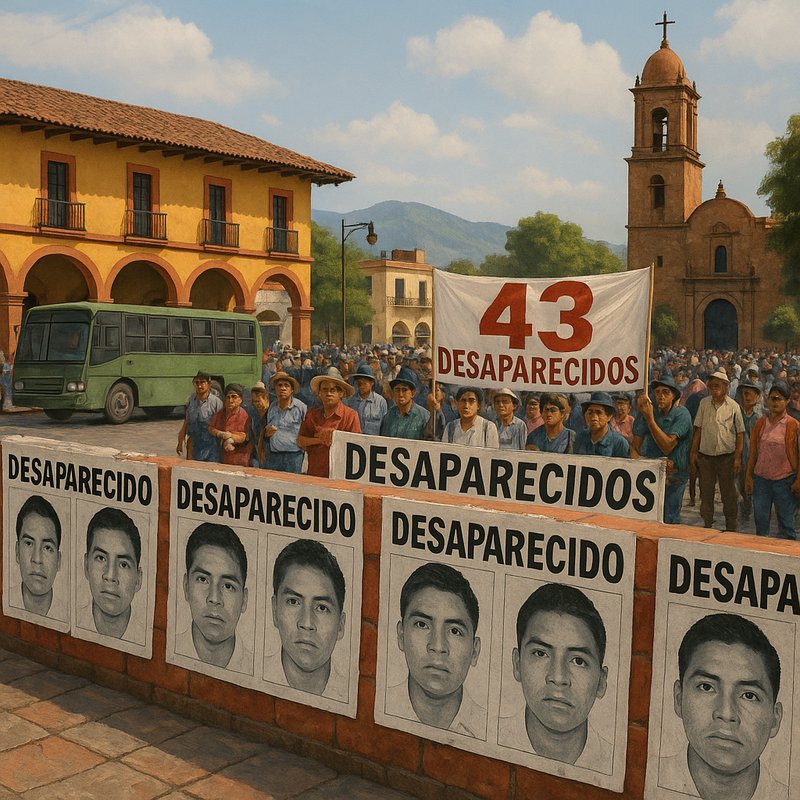
On the night of September 26, 2014, armed attackers opened fire on buses carrying 43 students through Iguala, Guerrero, killing six people and injuring twenty-five. Municipal police detained the surviving students and handed them directly to Guerreros Unidos cartel operatives. The students were never seen again. Despite years of investigations, only three students' remains have been officially identified, and the full truth — including alleged military involvement — still hasn't surfaced.
Key Takeaways
- On September 26, 2014, armed attackers and municipal police in Iguala, Guerrero, attacked buses carrying 43 Ayotzinapa students, killing six people.
- Surviving students were detained by municipal police and allegedly handed directly to the Guerreros Unidos cartel, causing their disappearance.
- Mexico's government initially declared the "historic truth" that students were killed and burned at Cocula dump, later widely disputed.
- Independent forensic experts found the official Cocula burn site narrative scientifically implausible, with DNA evidence failing to support the government's account.
- A decade later, only three students have been identified through remains, and no complete accountability has been achieved.
What Actually Happened the Night the Students Vanished?
On the night of September 26, 2014, armed attackers opened fire on buses carrying the 43 students through Iguala, Guerrero, killing three students and three bystanders and injuring 25 others.
Municipal police detained the surviving students and, according to witness testimonies, handed them over to members of the Guerreros Unidos cartel.
You can trace the chaos through timeline reconstruction efforts, which reveal a sequence of police shootings, forced detentions, and coordinated handoffs happening across multiple locations that night.
After authorities transferred the students, they were never seen alive again. The exact moments following their detention remain disputed, but the evidence consistently points to direct collusion between local law enforcement and organized crime as the driving force behind their disappearance.
How Municipal Police and the Guerreros Unidos Cartel Took the Students
Municipal police from Iguala didn't just witness the attacks that night—they actively participated in detaining the surviving students after the armed assault. Through what investigators describe as deliberate police collusion, officers rounded up the students and handed them directly to members of the Guerreros Unidos cartel. You're looking at a coordinated transfer, not a random act of violence.
Once the cartel took custody, their cartel logistics kicked in. The students were moved through a network designed to make people disappear without a trace. Investigators believe cartel operatives transported them to locations outside Iguala, where their fate was sealed. The seamless cooperation between local law enforcement and organized crime revealed how deeply corruption had embedded itself into Guerrero's institutions.
The "Historic Truth" and Why Families Rejected It
Families' mistrust grew quickly when alternative forensics emerged. Independent experts found the Cocula dump fire scientifically implausible. Here's what drove their rejection:
- Fire conditions couldn't have destroyed 43 bodies overnight
- No matching DNA surfaced at the dump site
- Witnesses described coerced testimonies
- Military involvement remained uninvestigated
The suppression of evidence recalled historical patterns seen elsewhere, such as the deliberate hiding of manuscripts in caves and basements by families protecting cultural heritage from those in power for centuries. Families demanded real answers—not a convenient narrative designed to close the case prematurely.
Which Ayotzinapa Students' Remains Have Been Identified?
Amid years of unanswered questions, only three of the 43 missing students have had their remains officially identified. Forensic teams faced serious DNA challenges throughout the investigation, as the condition of recovered materials made accurate testing extremely difficult.
The first identified remains belonged to Alexander Mora, confirmed in 2014. Christian Alfonso Rodríguez followed in 2020, and Jhosivani Guerrero's identification came in 2021. Each confirmation brought painful closure to one family while reminding the other 40 families that they're still waiting.
You can see why these DNA challenges have frustrated both investigators and relatives. The process is slow, technically demanding, and emotionally devastating. Decades may pass before—or if—any additional identified remains emerge, leaving most families without the certainty they desperately need.
Has Anyone Been Held Accountable for the Ayotzinapa Disappearances?
While families wait for remains to be identified, they're also pushing for something else: accountability. Despite years of investigations, no one's been fully held responsible. International pressure and demands for legal reforms have kept the case alive, but justice remains elusive.
Here's what you should know about accountability efforts:
- Municipal police allegedly handed students over to the Guerreros Unidos cartel.
- Military involvement in a broader cover-up has been alleged since 2022.
- The original "historic truth" narrative was widely criticized as a cover-up itself.
- Arrests continue, but no complete accountability has been achieved.
You're looking at a case where corruption ran deep across local, state, and federal levels — making full justice extraordinarily difficult to deliver.
Why the Ayotzinapa Case Remains Open a Decade Later
A decade after 43 students vanished in Iguala, the case remains open because corruption ran too deep for any single investigation to untangle. You're looking at a system where local police, organized crime, and federal officials all allegedly played a role, making accountability nearly impossible to isolate.
Military accountability has become a central demand, with families insisting the army's involvement was deliberately buried. Without judicial reform that strips protected institutions of their legal shields, prosecutors can't pursue every thread.
Witnesses face intimidation, evidence gets destroyed, and courts move slowly against powerful defendants.
The Ayotzinapa case shares grim parallels with other targeted attacks on vulnerable communities, where sectarian and ethnic minorities have faced violence designed to intimidate and silence them rather than achieve any conventional military objective.
You can't resolve a case like this without confronting the institutions that enabled it. Until Mexico restructures how it investigates state-connected crimes, the Ayotzinapa families will keep waiting for answers that justice has yet to deliver.