
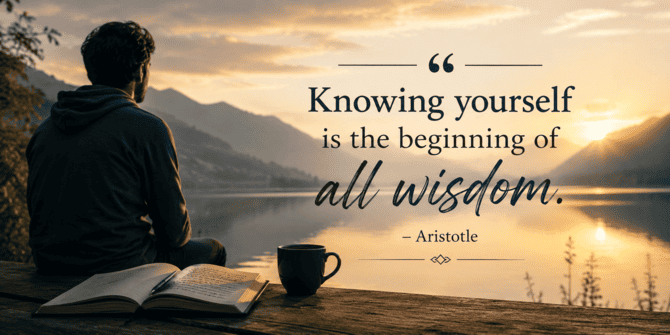
This popular philosophical quote points to one of the most important ideas in life: before we can understand the world clearly, we must first understand ourselves. It reminds us that wisdom does not begin with having all the answers. It begins with honest self-awareness.
What the Quote Means
To know yourself means to understand your thoughts, values, strengths, weaknesses, habits, fears, and motivations. It means being honest about who you are, what matters to you, and why you make the choices you make.
Wisdom is not only about intelligence or knowledge. A person may know many facts and still make poor decisions. True wisdom requires self-understanding because our choices are shaped by our emotions, desires, assumptions, and beliefs.
When we understand ourselves better, we are less likely to be controlled by impulse, pride, anger, or insecurity.
Why Self-Knowledge Matters
Self-knowledge helps people make better decisions. When you know your values, it becomes easier to choose a path that fits your life instead of simply following what others expect.
It also helps in relationships. A person who understands their own emotions can communicate more clearly, admit mistakes more easily, and respond with more patience.
Self-awareness also brings personal growth. You cannot improve what you refuse to see. Recognizing your weaknesses is not a sign of failure. It is the first step toward becoming better.
The Link Between Self-Knowledge and Wisdom
Wisdom often comes from reflection. It grows when people ask themselves honest questions:
Why did I react that way?
What am I really afraid of?
What kind of person do I want to become?
What choices keep repeating in my life?
These questions may seem simple, but they can lead to deep insight. Many people spend years trying to understand success, happiness, love, or purpose without first understanding their own role in those things.
That is why the quote is powerful. It suggests that wisdom begins inside the person asking the questions.
A Lesson for Everyday Life
This quote is useful because it applies to everyday situations. Before choosing a career, entering a relationship, making a major decision, or responding to conflict, self-awareness matters.
Knowing yourself can help you avoid choices based only on pressure, comparison, or temporary emotion. It gives you a clearer sense of direction.
For example, someone who knows they value peace may choose a simpler life over a more impressive but stressful one. Someone who knows they struggle with pride may learn to listen better. Someone who knows they fear failure may begin taking small risks instead of avoiding growth.
Why the Quote Still Feels Relevant
Even in modern life, where people are surrounded by opinions, trends, and constant information, self-knowledge remains essential. It is easy to be distracted by what others are doing. It is harder to pause and ask what is truly right for your own life.
The quote remains popular because it speaks to a universal truth. People often search for wisdom outside themselves, but part of the answer begins with looking inward.
Final Thoughts
“Knowing yourself is the beginning of all wisdom” is a reminder that personal understanding is not selfish or shallow. It is the foundation for better choices, stronger relationships, and a more meaningful life.
The more clearly we understand ourselves, the more wisely we can live.